
How Epoxy Flooring Improves Safety in Warehouses and Factories
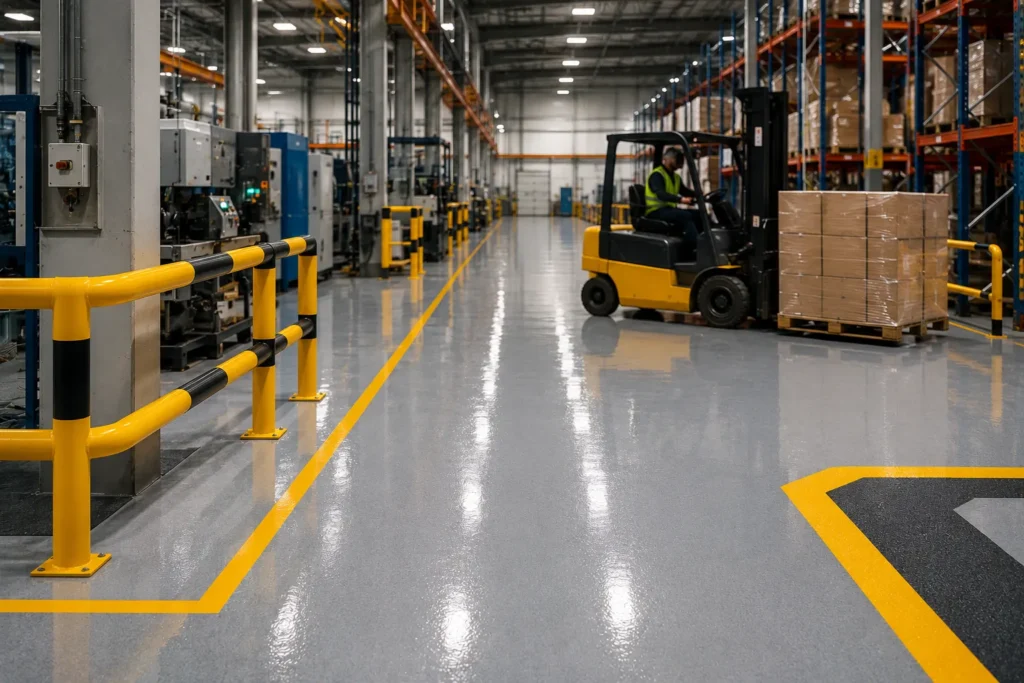
Epoxy Flooring has become one of the most effective safety solutions for warehouses and factories. Industrial facilities face daily risks from slips, trips, chemical spills, heavy machinery, and forklift traffic. According to the U.S. Bureau of Labor Statistics, more than 450,000 workplace injuries occur annually in manufacturing environments. Flooring conditions contribute to many of these incidents.
Modern facilities need surfaces that improve worker protection while supporting productivity. Epoxy-coated floors create seamless, durable surfaces that reduce hazards and withstand demanding operations. Many warehouse managers report fewer maintenance issues after installing epoxy systems. These coatings also improve visibility, chemical resistance, and equipment performance.
We have seen industrial facilities reduce cleaning time by up to 40% after upgrading to epoxy surfaces. The smooth finish prevents dust accumulation and simplifies maintenance routines. This combination of safety and operational efficiency makes epoxy a preferred choice for manufacturing plants, logistics centers, and distribution warehouses.
Understanding how epoxy flooring enhances workplace safety helps facility owners make informed decisions about long-term investments. The benefits extend beyond appearance and directly impact employee well-being and operational performance.
Why Epoxy Flooring Reduces Workplace Accidents
Slip Resistance and Surface Protection
Epoxy Flooring significantly reduces slip-and-fall risks in industrial environments. Specialized anti-slip additives create textured surfaces that improve traction even when floors become wet. This feature is particularly important in warehouses where liquids, oils, and chemicals are frequently present.
Industrial safety studies show that slips, trips, and falls account for approximately 27% of workplace injuries. Epoxy systems help minimize these incidents by creating consistent walking surfaces without cracks, uneven areas, or loose materials.
The seamless structure also prevents water penetration. Unlike concrete, epoxy-coated surfaces do not absorb moisture. This characteristic helps maintain stable footing throughout the facility.
Key safety benefits include:
Improved traction for workers and equipment.
Reduced slip hazards in wet areas.
Elimination of floor cracks and surface defects.
Better visibility through reflective finishes.
Consistent walking and driving surfaces.
These features create safer environments for both employees and machinery operators.
Enhanced Visibility and Equipment Safety
Brighter Workspaces Improve Awareness
Lighting plays a major role in industrial safety. Many epoxy coatings reflect up to 300% more light than untreated concrete surfaces. Increased brightness improves visibility throughout warehouses and manufacturing facilities.
Better visibility helps forklift operators identify obstacles quickly. Workers can also spot spills, debris, and safety markings more easily. Clear visibility reduces reaction times and lowers accident risks.
Color-coded epoxy systems further improve workplace organization. Facilities often use designated colors for pedestrian walkways, forklift lanes, hazardous zones, and storage areas. This visual guidance reduces confusion and improves traffic management.
| Safety Feature | Benefit | Operational Impact |
|---|---|---|
| Reflective Surface | Increased lighting efficiency | Reduced visibility risks |
| Color-Coded Zones | Better navigation | Improved workflow |
| Seamless Finish | Fewer tripping hazards | Safer movement |
| Anti-Slip Texture | Better traction | Lower injury rates |
| Chemical Resistance | Spill protection | Enhanced workplace safety |
Many factories report improved employee confidence after implementing clearly marked epoxy flooring systems.
Chemical and Impact Resistance for Industrial Protection
Protecting Workers and Infrastructure
Industrial environments expose floors to chemicals, oils, solvents, and heavy equipment daily. Epoxy Flooring creates a protective barrier that prevents these substances from penetrating the surface.
Chemical resistance is especially important in manufacturing plants. Spilled chemicals can weaken untreated concrete, creating dangerous cracks and surface failures. Epoxy coatings protect the substrate while maintaining a safe working environment.
Forklifts can weigh between 8,000 and 36,000 pounds. Continuous traffic places significant stress on flooring systems. Epoxy surfaces distribute weight effectively and resist impact damage. This durability reduces maintenance interruptions and prevents hazardous floor deterioration.
Industrial facility managers often note measurable reductions in repair costs after installing epoxy systems. Fewer damaged areas mean fewer temporary hazards and less downtime.
Additional safety advantages include:
Resistance to oil and chemical spills.
Protection against concrete deterioration.
Improved forklift stability.
Reduced dust generation.
Lower maintenance-related disruptions.
These benefits support safer daily operations while extending floor lifespan. Explore our solutions for Industrial environments.
Long-Term Safety and Compliance Benefits
Supporting Workplace Safety Standards
Safety regulations continue to evolve across industrial sectors. Epoxy Flooring helps facilities maintain compliance with workplace safety requirements by creating durable and easily maintained surfaces.
Dust control represents a major advantage. Untreated concrete gradually releases fine particles into the air. These particles can affect air quality and create respiratory concerns. Epoxy seals the surface completely, reducing airborne dust and improving workplace conditions.
The smooth finish also supports efficient cleaning. Sanitation teams can remove contaminants quickly without specialized equipment. Faster cleaning reduces exposure to hazardous materials and improves operational efficiency.
Industry experts recommend epoxy flooring for facilities seeking long-term safety improvements because of its durability and low maintenance requirements. Many systems last between 10 and 20 years when properly maintained.
The combination of durability, visibility enhancement, slip resistance, and chemical protection makes epoxy one of the most comprehensive flooring solutions available for industrial environments.
Conclusion
Epoxy Flooring delivers measurable safety improvements for warehouses and factories. Its seamless surface reduces slip hazards, improves visibility, resists chemical damage, and supports safer equipment operation. These benefits help organizations protect employees while improving efficiency.
Industrial facilities face constant operational challenges, and flooring plays a critical role in workplace safety. Epoxy systems provide long-term durability while minimizing maintenance requirements and reducing accident risks. With lifespans reaching 20 years and proven performance in demanding environments, epoxy flooring remains a practical investment for companies seeking safer, cleaner, and more productive industrial facilities.