
Why Terrazzo Flooring Works Well in Commercial Spaces
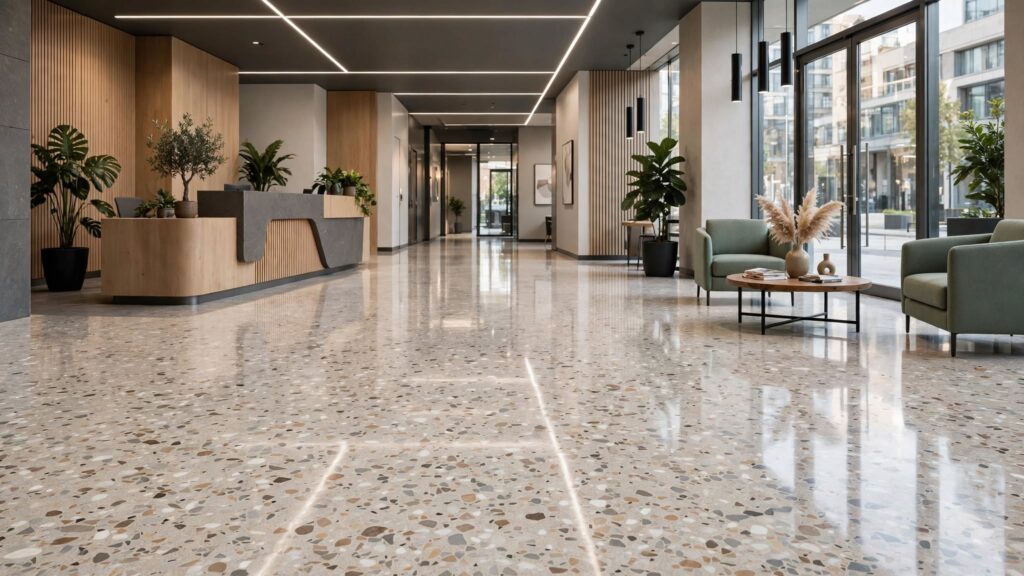
Commercial flooring has to balance appearance with everyday practicality. Offices, retail stores, hotels, restaurants, schools, healthcare facilities, and public buildings all need surfaces that can cope with regular foot traffic while remaining easy to maintain and visually appropriate for the space.
Terrazzo flooring meets many of these requirements distinctively. Made by combining decorative aggregates with a cementitious or resin-based binder, terrazzo creates a smooth, finished surface that can be adapted to different interiors. Its combination of durability, design flexibility, and relatively straightforward maintenance makes it particularly useful for commercial environments.
What Makes Terrazzo Flooring Different?
Terrazzo is a composite flooring material containing small pieces of marble, granite, glass, quartz, or other suitable aggregates. These materials are mixed with a binder, installed as a continuous surface or in sections, and then ground and polished to achieve the required finish.
The visible aggregate gives terrazzo its characteristic appearance. Depending on the chosen materials, colours, and aggregate sizes, the finished floor can look subtle and understated or become a prominent part of the interior design.
This flexibility is one reason terrazzo flooring works across very different commercial settings.
Suitable for Busy Commercial Environments
Commercial floors experience conditions that residential surfaces may rarely face. Entrance areas deal with frequent pedestrian movement and outdoor dirt, while corridors, reception areas, shops, and public spaces can remain in use for much of the day.
Terrazzo provides a hard surface suited to these demanding areas when the flooring system is correctly specified and installed. Rather than relying on a thin decorative layer, the appearance comes from the material itself.
A Practical Option for High-Traffic Areas
Terrazzo can be considered for spaces such as:
Hotel lobbies and reception areas
Shopping centres and retail stores
Office entrances and corridors
Educational buildings
Restaurants and hospitality spaces
Airports and transport facilities
Public and institutional buildings
The correct terrazzo system still needs to be selected according to expected traffic, substrate conditions, moisture exposure, cleaning methods, and other project-specific requirements.
Design Flexibility for Different Interiors
Commercial flooring often needs to do more than provide a walking surface. It can help define zones, reinforce an interior design concept, or create visual continuity between different areas.
Terrazzo offers considerable freedom in this respect. Designers can adjust aggregate colour, size, density, binder colour, divider strips, patterns, and overall finish. Neutral combinations can suit professional office interiors, while more expressive mixes can complement restaurants, hotels, or retail environments.
Custom patterns can also be incorporated into suitable installations. This makes it possible to create borders, geometric layouts, directional features, or other visual details without introducing a completely different flooring material.
A Clean, Cohesive Appearance
Large commercial interiors can quickly appear visually fragmented when too many finishes compete for attention. Terrazzo can create a more continuous appearance across entrances, corridors, reception spaces, and other connected areas.
Its polished finish also works well alongside other carefully selected interior surfaces. Flooring, walls, ceilings, lighting, and painted finishes should ideally be considered together rather than as separate decisions. The principles discussed in Interior Painting Tips for Long-Lasting Professional Results are relevant here because careful preparation and appropriate material selection contribute to a more consistent commercial interior overall.
Maintenance Can Be Straightforward
Maintenance is an important part of commercial flooring selection because appearance alone does not determine whether a floor is practical.
A smooth terrazzo surface is generally easier to clean than flooring with numerous deep joints or textured areas where dirt can collect. Routine care typically involves removing loose debris and cleaning the surface with products and methods appropriate for the installed terrazzo system.
However, terrazzo should not be treated as maintenance-free. Cleaning chemicals, equipment, frequency, and protective treatments need to suit the particular binder and finish. Harsh or unsuitable products may affect the surface over time.
Establishing a suitable maintenance plan from the beginning can help preserve the floor’s appearance and avoid unnecessary corrective work.
Terrazzo Can Support Wayfinding and Space Definition
One useful feature of commercial terrazzo flooring is the ability to integrate design changes directly into the floor.
For example, a large office lobby might use one terrazzo mix for the main circulation route and a contrasting border around waiting areas. A retail environment could use changes in aggregate or pattern to distinguish different zones without installing physical barriers.
These details can help people understand how a space is organised while keeping the overall flooring scheme visually connected.
Important Considerations Before Installation
Terrazzo is not automatically suitable for every commercial project. The condition of the substrate matters, and movement, moisture, existing construction, installation depth, and surrounding materials may all influence the flooring specification.
Installation also requires careful preparation and finishing. Poor substrate preparation or inappropriate detailing can affect the final result, regardless of the quality of the visible materials.
Project teams should also consider downtime. Grinding, polishing, curing, or other installation stages can affect when an area becomes available for normal use. In an occupied building, installation may therefore need to be coordinated around business operations.
Slip resistance deserves attention as well. The required surface characteristics can vary depending on whether terrazzo is being used in a dry office corridor, an entrance exposed to wet footwear, or another environment with different safety considerations.
Choosing Terrazzo for the Right Reasons
The strongest case for terrazzo flooring comes from considering the entire commercial environment rather than focusing on appearance alone. Traffic levels, cleaning routines, interior design, substrate conditions, installation requirements, and future maintenance all influence whether it is an appropriate choice.
For projects where a hard-wearing, visually adaptable, and cohesive flooring surface is required, terrazzo can offer a useful balance between function and design. Its range of aggregates, colours, patterns, and finishes also gives architects and designers room to create floors that suit the identity of individual commercial spaces.
Conclusion
Terrazzo flooring works well in many commercial spaces because it combines practical surface characteristics with broad design possibilities. It can handle demanding environments when properly specified, create continuity across large interiors, and allow patterns or zoning details to become part of the flooring itself.
Successful results depend on more than choosing an attractive terrazzo mix. Substrate preparation, system selection, installation planning, surface finish, and ongoing maintenance all matter. When these factors are considered together, terrazzo can provide a functional and visually considered foundation for a wide range of commercial interiors.